HPV: The Virus that Sneaks Up On People

Let’s start this off with a question: What comes in many, but may not be associated with any signs or symptoms? If you guessed human papillomavirus, or HPV for short, then you are 100% correct. As discussed in class, there are many kinds of HPV. All of these viruses have some common characteristics. For example, they are doubled-stranded DNA viruses and do not have envelopes. In addition, they all fall into the Papillomaviridae family. The main differences between the different types are that some can cause diseases in certain species and some can cause diseases in certain tissues of the targeted organism. While some kinds of HPV infections are asymptomatic, some do indeed cause the infected individual to show some sort of signs and symptoms, mainly warts, especially in the genital areas. Quite a few of them lead to cancers concerning the cervix, throat and rectum. Sexual transmission is a common way to pass HPV from one individual to another, so watch out kids!
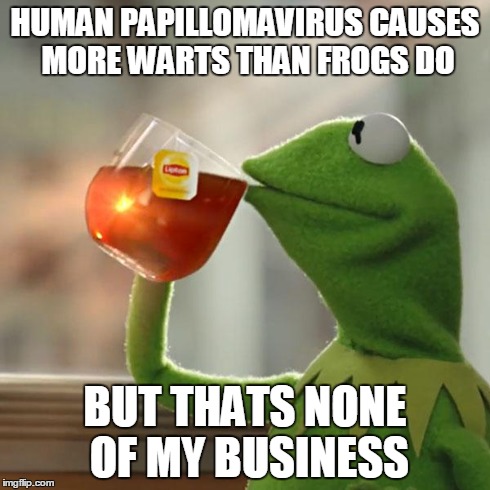
“Human Papillomavirus Causes More Warts Than Frogs Do.” Imgflip, https://imgflip.com/i/dr0db.

What’s the News, Doc?

According to an article from ScienceDaily, it has been discovered that individuals may not need to get as many HPV vaccines as they have been recommended to get. Researchers noted that the HPV vaccine is a vital source of protection against HPV infections, and as a result, cervical diseases that can arise from these infections. Moreover, one dose of this particular vaccine may just do the trick. Normally, two doses of the HPV vaccine are required for individuals who are less than 15 years of age. On the other hand, individuals 15 years old and up will need three doses of the HPV vaccine. Part of the study involved looking at the rate of protection between one dose, two doses, and three doses of HPV vaccine and found that individuals who were in the groups that had either one dose or three doses had about the same level of protection against what is referred to as “preinvasive” cervical diseases. While there is still much to discuss concerning this new finding, it is definitely a great start.

This discovery proves that when we think we know something, we do not actually know it. Believe it or not, there is still much we need to learn in the world. If this proves to be a solid finding, healthcare professionals may require individuals to only have to get one dose of the HPV vaccine. Think about it, this can save so much money, time, and resources. Either way, I believe that this experiment highlights the significance of receiving vaccinations. Moreover, when children are vaccinated as early as is deemed acceptable, this provides them with protection early on, which is a good thing if you ask me.

Everything Starts From Something

According to an article from HPV Vaccine, the earliest human clinical trials of the vaccine, Gardasil, was experimented on over 25,000 individuals. Moreover, about 4,000 of those individuals were men and over 20,000 of those individuals were women. Females and males as young as 9 years of age and as old as 45 years and 26 years, respectively, were involved. More females were included in the study because it is considered a sexually transmitted infection (STI) that appears quite frequently in the female population. The results of these trials were quite astonishing. In regards to protecting individuals from the unwanted effects on cervical cells that can result from HPV types 16 and 18, these trials gave an efficiency rate of nearly 100%. It was important for researchers to watch out for these abnormal characteristics because they are indications of cervical diseases. It was reported that Gardasil can also protect individuals from HPV types 6 and 11 as well. This showed the world that it was possible to protect humans, especially women, against strains of the human papillomavirus, as well as diseases, such as cervical cancer and anal cancer, that are caused by this virus.

This article has opened my eyes to the wonders of vaccines and the extent to which vaccines need to be tested in order to be used by the public. As a woman, knowing that this is a very common STI among many women is a scary notion for me to think about. I want to take advantage of the resources that are available to me in order to protect myself and protect others as well. I hope others will do the same. Think about it: There’s a good reason why so much time and money are put into the creation of a vaccine, right?
The Bacterial Resistance Rises

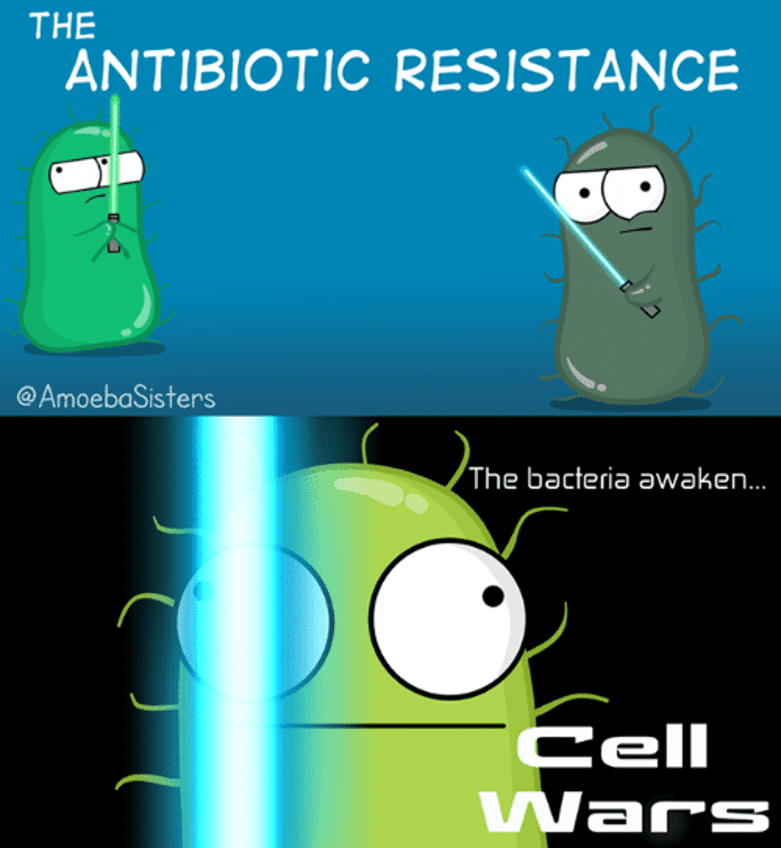
“Down with the Resistance!” If you are a fan of the Star Wars sequel trilogy, then you would know this motto rings well with Kylo Ren and the First Order. However, if you’re an aspiring microbiologist, you would know that this message is in regards to antibiotic resistance. You may have even taken the time to do additional research in order to understand more about this topic. In both cases, resistance is the opposite of what you want. Nowadays, antibiotic resistance is a growing concern all around the world. Researchers and scientists are racing to find ways to prevent and solve this dilemma that affects anyone and everyone who uses antibiotics.

“The Antibiotic Resistance .” MEME, https://me.me/i/the-antibiotic-resistance-amoeba-sisters-the-bacteria-awaken-oceli-vv-13993530.

Superbugs: The Protectors of Their Generation

As discussed in class, superbugs are bacterial strains that have developed resistance towards antibacterial medications. These superbugs have created many problems in recent years because they hinder the effectiveness of these antibiotics. This resistance can arise from incorrect usage of antibiotics. Moreover, antibiotics should not be used to treat viral infections. Viral infections include the flu and common cold. Using antibiotics when they are not necessary increases the chances for good bacterial cells to be killed off. These bacterial cells were meant to keep the body from succumbing to infection. Now, the bacteria that are left are those that have obtained a mutation that allows them to resist the drug. Without a large number of the good bacteria left, they can increase in number. Therefore, it is vital that we learn how to use antibiotics correctly in order to prevent these resistant bacteria from arising and taking over.

It’s Only the Beginning

According to an article from the ScienceDaily, there is emerging resistance against antibiotics used to treat flesh-eating disease and strep throat. Moreover, a category of bacteria known as group A streptococcus have demonstrated evidence that show that it is growing stronger against beta-lactam antibiotics. Beta-lactam antibiotics include penicillin. This type of bacteria is gram-positive and appears as chains. It has become an international project to look at these strains, namely 7,025 of them. While only 2% of these strains contain gene mutations that lead to antibiotic resistance, it is no laughing matter regarding what these strains are now able to do. It is only the beginning and likely to get worse later on. Researchers are urging for a group A streptococcus vaccine to be created. Antibiotics are supposed to be the best defenders against bacteria and many fear that other therapies won’t be as strong as them.

In my opinion, this finding comes to show how easily bacteria can build resistance to medications that individuals take to fight against something as common as strep throat. It is a frightening notion to think about because all of us have used some sort of antibiotic at some point in our lives. Most of us only think about how these medications make us physically feel. However, at a microbiological view, organisms, such as bacteria, are taking your actions to their advantage because with more contact to these antibiotics, one of the bacterial cells are bound to develop resistance and thrive. It just takes one for this to happen!

In addition, according to an article from the Center for Infectious Disease Research and Policy, devices used in hospital settings have greatly contributed to the appearance and distribution of bacteria that are resistant to antibiotics. Moreover, ventilators and catheters that are used on patients have been associated with this issue. In addition, bacterial infections that have resulted after surgery are important to consider as well. Infections resulting from the use of these medical devices and surgery fall into a category known as healthcare-associated infections. Out of the healthcare-associated infections, Staphylococcus aureus and Escherichia coli appeared the most frequently. For example, vancomycin does not seem to have any effect on about 80% of Enterococcus faecium involved in healthcare-associated infections. In addition, fluoroquinolone is not as effective against E. coli as it used to be. Adults have shown to be more susceptible to these resistant bacteria because they have used antibiotics longer than children have.

Knowing that these resistant bacteria have the potential to be passed around through medical devices, such as ventilators and catheters, does not make me feel any better than I did before about antibiotic resistant organisms. This highlights the importance of aseptic technique in the surgery rooms in the hospital setting. It is vital that these resistant bacteria are prevented from spreading to individuals in the hospital who are already immunosuppressed. Moreover, this also highlights the fact that bacteria are growing more and more resistant every day and that proper use of antibiotics needs to be implemented now more than ever. Let’s not let the discovery of antibiotics be in vain.

It’s a Vaccine, Vaccine, Vaccine World (Or It’s Going to Be Hopefully)

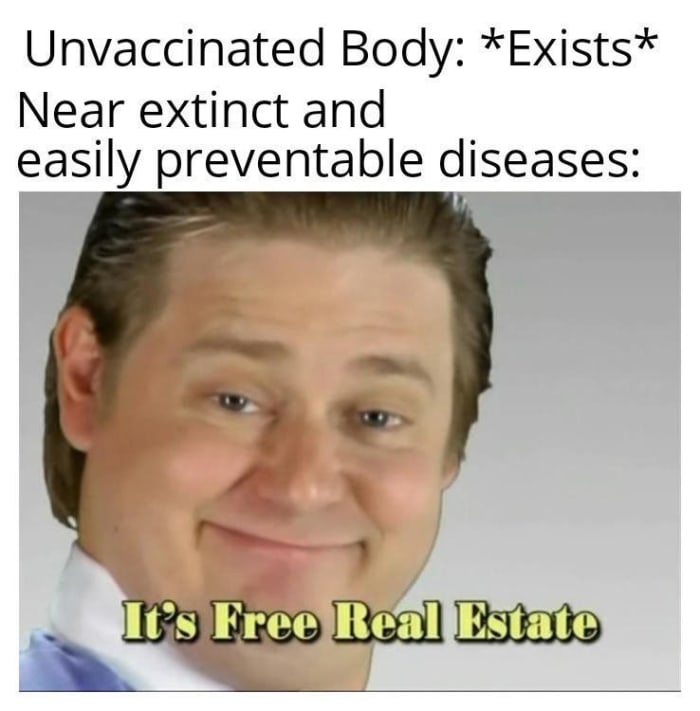
Health. Vaccination. What comes to your mind when you hear those words? To me, I believe they are some of the most essential parts of life. Having good health is what allows humans to live their lives to the fullest. Nowadays, being vaccinated is a major aspect of obtaining or maintaining a healthy life. It is one of the reasons why certain diseases, such as tetanus, are rarely seen in the United States. However, it is without a doubt that there are still places in the world that do not have vaccines readily available to them. It is not something that we talk or think about every day because getting vaccinated is normal in the United States. While many of us may not know of anyone who currently has poliomyelitis, it is still present in the world.

“Free Real Estate.” Ruin My Week, https://ruinmyweek.com/memes/anti-vax-memes-funny/3/.

Polio Vaccines – Why So Many Acronyms?

Poliomyelitis, or simply known as polio, is a disease caused by an enterovirus from the Picornaviridae family. Moreover, this disease can result in paralysis because it can affect the central nervous system, where it damages the nerves found in the spinal cord. From the information we learned in our microbiology class, the number of distinct strains of the virus that have the ability to cause polio in humans is three. The inactivated polio vaccine (IPV) and the oral polio vaccine (OPV), are two known vaccines that are used. The difference between the two is that IPV contains the virus in its inactivated form, whereas OPV contains the version of the virus that is weak and can be administered orally as well. Both types of vaccines have the ability to induce the formation of antibodies from the immune system. The IPV alone does not prevent the virus from multiplying in the individual, especially in the areas of the intestines and throat. Due to this fact, the IPV does not fully stop this virus from being spread to the feces, and as a result, to other people. On the other hand, the OPV is a better contender to uphold herd immunity because it stops the virus from multiplying and affecting the cells, so that it cannot be spread to other people via feces. It is important to note that there is a big setback to this vaccine – the strain in the vaccine has the ability to mutate and cause disease. Previously, the IPV would be administered and then the OPV. Now, the OPV is not administered in the United States anymore.

The Current State of Polio in the World

According to an article from the Global Polio Eradication Initiative (GPEI), the elimination of the wild poliovirus type 3 (WPV3) had occurred late last year. Previously, the wild poliovirus type 2 (WPV2) was eradicated back in 2015. That’s right – not one, but TWO, of the three strains of polio have been “wiped out of existence”. In addition to that, the World Health Organization (WHO) reported that the wild poliovirus type 1 (WPV1) is still present in Pakistan and Afghanistan. While some people may think that this is not a big deal since the strain is only seen in 2 out of the 195 countries in the world, it still does not get rid of the fact that there are still instances of this disease nowadays.

I believe that it is incredible news that two out of the three strains have been eliminated from the world. In addition, I think it is interesting to note that this fact does not take into account the cases in which the polio was developed from vaccines (or “vaccine-derived”, as many call it). While much celebration is in place, it is important to remember that there are still cases of polio that still exist in the world and that we should continue to keep up the good work. Moreover, we need to remember to give credit to global eradication programs that have demonstrated and continue to be critical components of this.

What Do You Mean “Vaccine-Derived” Polio?

According to an article from NPR, polio continues to be quite a concern in the world, but not in the way that most people think it is. It is not that the WPV3 have made a major comeback into the population. Instead, instances of polio that have resurfaced in countries in Asia and Africa are not necessarily induced by wild polioviruses. Specifically, these cases of polio seem like they are “vaccine-derived”, as most people describe them. A few years back, there was a change made in the OPV, in which only WPV1 and WPV3 were included, while WPV2 was pulled out. This was because the OPV previously still had the WPV2 strain, even though this type of polio was technically eliminated from the world. As mentioned before, the attenuated form of the poliovirus in the OPV has the ability to revert back to its disease-causing self, meaning WPV2 had the potential of coming back again if it stayed in the OPV. However, now Type-2 polio has made a comeback because of the use of vaccines (hence “vaccine-derived”). Moreover, since the attenuated strain for Type-2 polio was taken out, there is no protection against that kind of polio virus anymore. Therefore, to deal with any unplanned instances of WPV2, individuals who had any risk of coming into contact with the virus were given vaccines that only had the ability to prevent Type-2 polio from developing. However, residue from infected areas affected those that did not receive any cautionary vaccination. The strain in this particular vaccine had the ability to change back into its virulent form and infect those that had no protection against Type-2 polio because it was taken out of the OPV years ago.

It seems as if health officials have caught themselves in a spell – how do you get rid of Type-2 polio if it results in the rise of “vaccine-derived” Type-2 polio? Is it too much to simply include the attenuated strain for poliovirus type 2 in the OPV again to make sure that individuals are immune to this form of polio or is it once again too risky? These are the questions that keep me up at night. I believe that better boundaries are needed to prevent the virus from being spread in the environment. This is most definitely a difficult feat to achieve because it is very difficult to contain everything in one place, especially in underdeveloped countries.

Many of us in the United States go to the doctor’s office to receive some type of vaccination and then call it a day. However, we sometimes fail to realize how much attention and research goes into determining the composition of these vaccines. These vaccines were designed to attempt to protect us in the best way possible. Even when it does not, we must try to find alternative solutions to protect ourselves and the rest of the world.

To Have or Not to Have: Measles Edition

In today’s day and age, vaccines have been created for diseases, such as the mumps, measles, flu, diphtheria, tetanus, and whooping cough. Especially in the United States, these developments have helped prevent a countless number of individuals from getting these diseases. However, due to some obstacles along the way, such as Andrew Wakefield’s report spreading false claims connecting autism and vaccines, some adults and children have not received their vaccines. The anti-vaxx movement has cast quite a spell on some of the population – increasing the chances for some of these diseases to make a comeback into the population. As an example, let’s take a look at one of the diseases that was just mentioned: Measles.

“Develop a Vaccine for Measles.” Meme, https://meme.xyz/meme/395&nomobileview=1.

What Exactly is the ‘Measles’ Vaccine?

As discussed in class, a vaccine known as the MMRV vaccine can be administered and provide some sort of protection against MEASLES, mumps, rubella, and varicella. In this vaccine, there are attenuated strains of measles that are incorporated. Moreover, its attenuated form is the version of the virus that is weak. Here, it is able to generate a strong cell-mediated immune response. Since attenuated vaccines are able to protect the individual for a longer time than that of inactivated vaccines, no more than two doses are usually required for these types of vaccines. Specifically, the immune system of the vaccinated individual is introduced to an overwhelming level of this particular antigen for an extended amount of time.

The Power of the Measles Vaccine

According to an article from CNN, it was reported that having measles is a precursor to having additional health issues. These health problems include meningitis, pneumonia, and hepatitis. Moreover, individuals who are older than 20 years of age or younger than 5 years of age are more likely to develop these afflictions. Those that had these problems were reported to have zero or only one out of the two doses of vaccines as a child. Think about it – on top of the cough, rash, and fever linked with the disease, people who have measles have a higher risk of getting even more ill. In addition, it was reported that almost 1,300 individuals were diagnosed with the measles in the United States in 2019. To add to that, almost 150,000 deaths resulted from individuals getting the measles in the world – last year alone!

As someone who is currently learning about these diseases, it makes sense to me that other afflictions would arise because the individual is now immunosuppressed. Immunosuppression is the decrease in ability of the immune system to protect an individual from diseases and infections. In addition, it is a shock to me that the number of individuals who died from measles was approximately 150,000. Especially for a disease that has a known vaccine that can help prevent it, we need to be taking more actions in order to protect the people in the world from getting infected.

In addition, according to an article from The New York Times, the rubeola virus, which causes measles, can attack and damage cells. Specifically, these cells produce the necessary antibodies that the human body needs to protect itself from illnesses, such as influenza. In a way, this virus takes away the ability of the immune system to remember what diseases the individual has already encountered. It will take some time before the immune system can regain its ability to make the antibodies needed to defend the body against pathogens. Therefore, this increases the risk that the individual has to getting the same illnesses more than once.

I thought I was already convinced once I learned that measles could lead to further health problems. Specifically, I thought there could not be any more additional information that could further highlight the advantages of getting vaccinated, especially with the measles vaccine. Now, learning that there is a greater risk involved with getting past diseases if you get the measles has convinced me even more than I thought would be possible! Measles affects the immune system in a way that seems to completely wipe out its memory and somewhat its functionality after the infection. This is a lot to put your body through. Why wouldn’t you want to keep these adversities from happening knowing that one or two doses of a vaccine can do the trick?

It Takes Two

The events that have transpired over the past few months regarding measles only show that the existence of vaccinations is only one part of the equation. Moreover, it is how we decide to use these vaccinations that determine our state of health for ourselves, as well as for other people in the world. If we decide to not get vaccinated, then we increase the risk of getting diseases that these vaccinations protect us from. That is why we need to take advantage of these vaccinations available to us. It takes two to accomplish this feat – vaccinations and our own will. If you have not been vaccinated for any of these diseases, what are you doing sitting here and reading this blog post? Go get your vaccine today!

Vaccines: An Ongoing Debate with Adverse Effects

V as in Vaccine

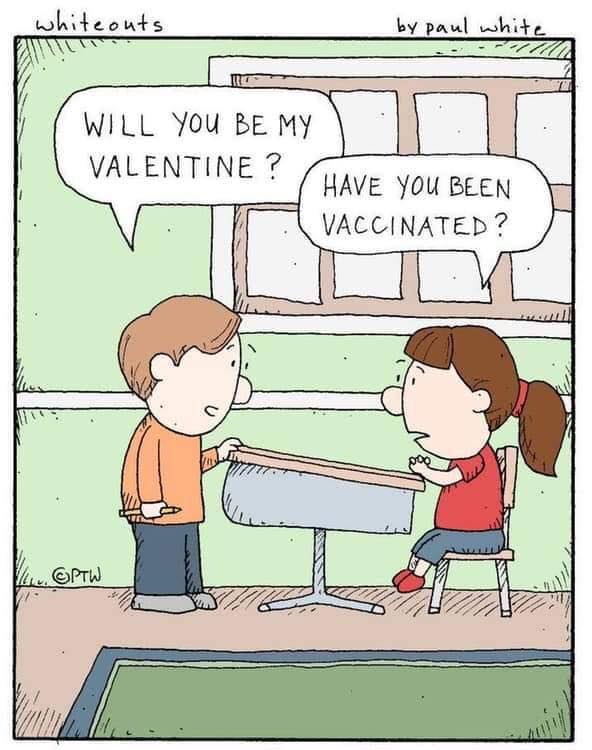
White, Paul. “’Will You Be My Valentine?’.” American Council on Science and Health, https://www.acsh.org/news/2019/03/04/top-10-pro-vaccine-or-anti-anti-vaxxer-memes-internet-13853.

I hope everyone had a great Valentine’s Day with your significant other or with your pals!! It is probably one of the most affectionate holidays during the year. In the midst of all of these holiday festivities, it is important to remember another important topic (and yes, it also starts with the letter “v”): vaccines. The world of vaccines is ever so changing, and actions most definitely speak louder than words in this case.

According to an article from BBC News, it has been reported that almost 5,100 individuals were diagnosed with mumps in the last year in England. It is important to note that this number is taking into account college-aged students ALONE. Many of you may be wondering how this could be, considering you and your loved ones may have never gotten it before. Luckily, you probably received the MMR vaccine or the MMRV vaccine. As discussed in class, these vaccines provide some sort of protection against measles, MUMPS, rubella, and in the case of the MMRV vaccine, varicella as well. However, the people who received this diagnosis more than likely did not receive one or both of the MMR vaccines. Much of this is attributed to Andrew Wakefield’s dishonest claims concerning autism and vaccines. At that time, it made sense that the parents of these undergraduate students did not want to let their children get vaccines. However, because of Wakefield’s untruthful report, they and their children are paying the price today. For those who have not been diagnosed with the mumps and have yet to receive at least one dose of the vaccine, they are GREATLY encouraged to get the vaccine as soon as possible.

I believe this outbreak highlights the lack of herd immunity present in the populations among universities in England. Because there is not enough people in the population that is immune to mumps (and other illnesses grouped in with the vaccine), the entire population is not protected from these diseases, hence the outbreaks. Moreover, the vaccination numbers still fail to reach the amount necessary to make sure the population is protected. I believe it is of utmost importance to inform the public of the most recent and accurate information concerning vaccines. It is a gradual change that we must continuously work towards if we want to protect ourselves as well as future generations of individuals.

The Anti-Vaxxing Movement Gains Momentum…from a Doctor?

According to an article from The Washington Post, an osteopathic physician by the name of Joseph Mercola has been selling products for anti-vaxxers to take in place of getting vaccines. These products are supplementation of vitamins C and D. However, most of the sources that he cited for his strong belief were not viable, as they were mostly redacted (sound familiar?). In addition, an organization known as the National Vaccine Information Center has received almost $3 million from Mercola himself. This anti-vaxx organization has been known for spreading false information concerning vaccinations. Even with the lack of evidence, this movement maintains its speed. It has been reported that the number of cases of measles have continued to rise. Moreover, in the last year, over 1,000 cases of the measles was reported in the U.S. alone! This is most definitely a consequence of decreased vaccination numbers.

It startles me that someone who has studied up to that level of medicine still does not believe in the use of vaccines. Time and time again, vaccines have been proven to provide some sort of protection for children and adults against diseases that have adverse effects. While Wakefield’s report did throw a wrench in the increasing rates of vaccination, the report has been long redacted. However, it is seen that turning the people’s view against vaccines around is going to take a lot more than just that.

In the last 100 years, the advancements in medicine and technology have been out of this world! Let us not let those discoveries go unnoticed. If you are fortunate enough to have access to one of the best health-care systems in the world, it is vital that you should take advantage of it. People in undeveloped countries who do not have access to these resources would do ANYTHING for these products, if it meant that they could live healthy lives. Just like the idea on how we should love more than we hate, we should focus on making sure to get vaccinated in order to protect ourselves, and even our loved ones.

Got the Guts to Learn What’s Happening Inside Your Guts?

Home of the Microbes

“Thanks for Inviting Us to the Party in Your Stomach.” Science ABC, https://www.scienceabc.com/humans/does-bacteria-in-the-gut-stomach-affect-mood-and-behavior.html.

The human microbiome is a wonder to study about! Think about it: Microbes live rent free inside your stomach! It is no question that there are more microbial cells than actual human cells inside of our bodies. As mentioned in class, we learned about many of the great advantages of the human microbiome. For example, some microbes inside of your intestines are able to break down carbohydrates that enzymes normally produced by the intestines are not able to do. In addition, these microorganisms can defend our bodies against pathogens by acting as competitors for nutrients and blocking attachment sites that pathogens aim for. These are a few of the many tasks that they carry out inside of our bodies. Therefore, it is VITAL that the human microbiome is kept in check and is not disrupted.

Constant Changes

According to an article from Medical News Bulletin, the type of species and the amount of that particular species present in the gut microbiome can suggest whether that individual is diabetic or not. Certain species of the Lactobacillus family are more common within the gut microbiome of an individual who has type 2 diabetes than others. Moreover, the number of L. gasseri, L. acidophilus, and L.salivarius discovered in the guts appeared to be far greater compared to other species in the Lactobacillus family. Bacteria that are classified as part of families, such as Bifidobacterium, Roseburia, Bacteroides, and Faecalibacterium, may be seen in fewer numbers in non-diabetic individuals. In this case, less is also better. It has been shown that if there is an increase in a particular species of Bifidobacterium bacteria, then the level of blood sugar may drop below normal because more glucose is removed from the blood by the influence of this type of bacteria.

It appears to me that there is some sort of disruption in the gut microbiome of individuals that are diabetic. Moreover, the different amounts and kinds of bacteria that are found in diabetic and non-diabetic individuals seem to serve as some sort of evidence of this idea. While type 2 diabetes may be hereditary, these disruptions may also be attributed to certain types of foods that people intake and that are a part of their diets. As mentioned in class, it is possible to introduce different microbes into the human body, such as through fecal transplants. If the introduction of microorganisms that help defend the body from type 2 diabetes is possible in any way (if it has not been done already), I think that it would be a great step for humankind!

“Communicable” Noncommunicable Diseases

In addition, according to an article from Live Science news website, several researchers have dedicated their time into looking into whether or not diseases that are not normally transmissible can actually be spread to other people. Diseases that are considered noncommunicable include cancer, cardiovascular diseases, and diabetes, to name a few. You may be wondering, “well how can a noncommunicable disease be communicable?” The answer to that question is linked to what is known as the microbiome. As mentioned with our discussion of diabetes above, the human gut microbiome can vary in quantity and types of bacterial species depending on what disease the individual is diagnosed with, such as inflammatory bowel disease. Moreover, it may be possible that if certain microbes that were more likely associated with a disease were to come into contact with people who had otherwise normal microbiomes, then it could potentially disrupt the microbiomes of the healthy individuals. Another interesting finding is that partners had a lot in common in regards to their microbiomes. In fact, it has been reported that if one of the partners in a relationship had previously been recognized with a illness (such as diabetes), then the other individual is more likely than normal to be diagnosed with the same illness as well. Who knew that could be possible!

While the extent to which the human microbiome can influence noncommunicable diseases is still up in the air, I believe it is interesting to think about the power that our gut microorganisms have on our bodies. It is quite fascinating – and often daunting – that these tiny organisms can have some sort of influence on whether we get sick or not. It is important to note that the microorganisms that make up the microbiome are NOT the only factors that dictate whether or not someone gets ill. Influences from the environment and genetics are also important to keep in mind. Since there are so many determinants to consider, the hardest part of this research will be to find out whether one type of influence is more dominant than another.

There is still much to be discovered concerning the microorganisms that inhabit the human body. Many of these organisms seem to hold more than just one role in influencing our bodily functions. This contributes to the complexity of these small entities in the already complex human body system. This will definitely be a topic of debate for years to come in the scientific community. Be thankful for the good microbes hard at work inside your body!

Chronicles of the Coronavirus – Week 2

New Week, New Revelations

Hi all! I hope everyone has been safe and healthy. Within a span of a week, many new urgencies and revelations have come to light about the 2019 novel coronavirus (2019-nCoV). The race to combat this infectious illness has become more urgent than ever. According to an article in the Nature Research Journal, a different organism has been pinned the new potential origin of the 2019-nCoV: pangolins. That’s right, pangolins. Pangolins are anteaters that have a distinct scaly skin and are commonly found in Asia. If you’re wondering how one gets into contact with a pangolin, you’re not the only one. In China, they are used as a source of meat, as well as an ingredient in medicine. It is reported that the genome sequence of the strand of virus from the pangolin matches as high as 99% of that of the 2019-nCoV. That is incredibly high! This is even higher than what was noted of that of the strand in the bat (noted in last week’s post about the coronavirus)! Moreover, both the virus in the pangolins as well as the 2019-nCoV both contain receptors that closely resemble one another. These receptors are used to attack healthy cells. It is important to note that this discovery has not yet been officially published. Nevertheless, it emphasizes the complexity of this illness and its origin.

With this new revelation of the potential source of the virus, it is only increasing my worry regarding what diseases other animals may be carrying. As mentioned in class, zoonotic diseases are dangerous to humans because these infectious microbes are foreign to the human body and so, they have no defense system against them yet. The answer to the question of what organism started it all is not so black and white. It requires much more research and patience. No matter what the source was, this virus does not look like it is going away anytime soon. We can only hope for the best.

“‘This Baby Pangolin Wants to Talk to You about Something Important.” MEME, https://me.me/i/this-baby-pangolin-wants-to-talk-to-you-about-something-19023312.

Domino Effect

The coronavirus has left its mark not only on the health of the population of the world, but also on people’s whereabouts as well. Moreover, according to an article from The New York Times, passengers on a cruise ship by the coast of Japan are not allowed to leave its vicinity because there has been at least 61 people who have been infected with the virus on the boat. Moreover, this means that approximately 2,000 people are trapped in their cabins on board the boat as scientists evaluate the situation at hand. Can you imagine going on vacation only to have your fun stop at a halt because of a dangerous virus circling around? That is quite terrifying. It gives me chills thinking about this because I went on a cruise with my family this past summer. I believe that disinfectants, such as soap, are not readily available on cruise ships as they are when you are on land. Since this is an enveloped virus, its transmission could be prevented with the use of disinfectants. In addition, it is very crowded on a cruise ship, which increases the amount of microbes that passengers can come into contact with.

Not too far from Japan, the country of Italy has been combating the virus in its own way, according to the same article from The New York Times. As of February 7th, it has been reported that there are three cases of the coronavirus present in the country. What I think is really interesting is the treatment that the hospital in Italy is using. Ritonavir is a drug normally prescribed for H.I.V. patients. However, the hospital, as well as the World Health Organization, has stated that this medication has depicted an effectiveness against the coronavirus itself. Here, it is important to acknowledge the power of medicine, as its use can give us some insight on how to create additional drugs to combat these viruses. While ritonavir is not the true treatment of the coronavirus, it is a good start.

Influenza Scare

Vaccine is the Magic Word

It is no question that the coronavirus is a large threat in our world right now. However, there is also another virus that people, especially in the United States, should be cautious of as well: the influenza. As mentioned in class, the incubation period for this virus is very short, lasting approximately 2 days. In addition, signs and symptoms include a sore throat, muscle ache, and fatigue. Due to the virus’ fast ability to change, vaccines for the influenza are created every year.

According to an article from the Center for Infectious Disease Research and Policy (CIDRAP), the flu shot for this year is not a strong competitor with the particular flu strain that is going around. The more common strain this year is known as influenza B/Victoria. Type B is known is cause outbreaks. It has been reported that there is a 58% likelihood that the vaccine will protect you from this strain. What I think is really interesting is why this strain of influenza appeared sooner than expected. In recent years, the B/Victoria strain has not been common and so, some people may not have strong defenses against this particular strain. Moreover, children and those who are older and immunocompromised are more at risk with this virus.

It is definitely a challenge to predict which strain of the influenza virus will be the most dominant. While the vaccine may not perfectly align with the strain, it is still crucial that individuals receive this flu shot. As mentioned in class, some protection is better than no protection and I fully backup this statement!

“People in Your Country Actually Refuse Vaccines?” American Council on Science and Health , https://www.acsh.org/news/2019/03/04/top-10-pro-vaccine-or-anti-anti-vaxxer-memes-internet-13853.

How’s it looking, Doc?

In addition, according to an article from CNN, the strong start that the influenza B/Victoria strain has displayed is definitely a surprise to most people. However, the influenza A strains are beginning to appear more frequently among the world population as well. Influenza A is known to cause widespread epidemics. Since the beginning of the flu season, it has been reported that in the United States alone, the total number of people infected with this illness is more than 22 million. That is a very high number, considering the population of the United States is made up of about 330 million people! In addition, there have been about 12,000 deaths from the illness, with approximately 80 of them being infants or children.

I believe that with two of the most alarming viruses circling around the world, it is important now, more than ever, that people practice good hygiene. Since both viruses are both considered enveloped viruses, something as simple as washing your hands with soap, or even hand sanitizer, can go a long way to protect yourself, as well as others. Knowing that there are microbes on your body that are undetectable by the eye is a scary notion to think about. Doing the activity with Glo Germ and hand washing this past week really put the way I washed my hands into perspective. It is also vital that whenever you feel under the weather, you should avoid going to work, as this may prevent the spread of illness to other people. Now more than ever, good hygiene is the way to go!!

New Year, New Threat

What’s all the Commotion?

A month into 2020 and it has already caused a rollercoaster of emotions and stress.  Many countries have put aside their differences in the efforts to try and combat what is called the coronavirus.  Let’s start with the basics. The coronavirus is a classification of respiratory viruses that are part of the Coronaviridae family, according to the Wikipedia page highlighting the coronavirus.  This specific coronavirus is called the 2019 novel coronavirus (2019-nCoV). It consists of a single-stranded (plus strand) enveloped RNA virus. This description reflects the general characteristics of viruses that were brought to my attention in class. This virus is unique in that it is enveloped, meaning that they have a higher sensitivity to disinfectants. In my opinion, the molecular structure of a virus is vital to understand because it ultimately dictates how we can combat this virus to the best to our ability.

According to a New York Times article, symptoms of this viral infection include coughing, shortness of breath, and fever. In addition, from the time that an individual is exposed to the time that he or she begins to show symptoms can last from 2 days to 2 weeks. This time period is known as the incubation period. This virus is known to pass to others through droplet transmission, a form of direct transmission that was covered in class. Moreover, liquid droplets are produced when people do what is most common to human nature, such as talk, sneeze, cough, and laugh, to name a few. From there, non-infected individuals may accidentally inhale these droplets if they are in close range. An infected person of this coronavirus can transmit it to approximately 1.5 to 3.5 people. I was shocked to learn that this could be as close as six feet away! Most of the conversations I have had in the last few days have been in closer ranges than this! There is still much to discover about the virus, such as if it can be transmitted prior to the appearance of the symptoms. I believe that this is by far one of the most dangerous aspects of this virus. Not knowing whether you have it and are transmitting it to your loved ones is a scary thought.

Where it All Began

Bats. That’s right, you read that right. According to Genetic Engineering and Biotechnology News, the outbreak of this particular virus began in Wuhan, China. A group of researchers in Wuhan discovered that the strains of 2019-nCoV found in patients at the beginning of the outbreak closely resembled those found within a particular strain of coronavirus in bats – a high resemblance of 96%, to be exact. It is very possible that an animal that was being sold at the Wuhan seafood market received this virus from a bat, and from there, it was transmitted to a human once they ate it. Or, it could have been that someone simply ate a bat and got infected. As discussed in class, while this zoonotic disease exists in both humans and animals, it seems to be more harsh in humans than in animals. This can be attributed to the fact that the virus was obtained accidentally. Knowing that bats are very likely the starting host, I certainly won’t be looking at bat decorations during Halloween the same way again. The fact that it was spread from eating animals frightens me a bit. It leads me to think about how other animals that many humans like to eat, such as chicken and fish, could also potentially carry diseases that we have no knowledge of, despite our very advanced technological world.

“‘We Used To Be Best Buddies, And Now We’Re Not.’” Design Press, 6 Mar. 2017, https://designpress.com/showcase/12-hilarious-bat-memes/.

Now What?

“‘Now What?”.” GIPHY, https://giphy.com/gifs/L6EoLS78pcBag.

According to the same New York Times article, as of January 30, the outbreak of this virus has been deemed a global health emergency. It will be a challenge to contain this virus because it is transmitted through droplet transmission, a form of direct transmission that is in a way, a part of human nature. It is part of human nature to interact with people every day and travel to our destinations, wherever that may be. While there are many lockdowns, as well as restrictions in travel in China, I believe that travel should be limited from country to country at this time due to the spread of the virus. For the time being, while families should not be split up, it may be best to do so in order to protect your friends and families back at home. As the numbers of individuals infected with the coronavirus continue to gradually rise throughout the world, we should not forget about another viral infection that is generally known to be common during these winter months: the influenza. It is of utmost importance that you protect yourselves from illnesses this season by cleaning your hands regularly by using soap and water. Even hand sanitizer can go a long ways to keep you from getting ill. The best we can do is follow these sanitary guidelines and hope that others are practicing the same procedure. May the odds be in your favor!

Truth Be Told

By far one of the most important values to uphold in the scientific world is the reality, or truth, of the results of one’s research. This value was tested in Andrew Wakefield’s claim concerning the connection between the MMR vaccine and autism. A bold, but empty, claim like this not only makes the scientific community appear untrusting to the public, but can also influence the public’s opinions and decisions on these important matters. While this paper has finally been retracted, the effects of this falsehood still has lasting effects that do not seem to be disappearing anytime soon.

Is it…is it real?

According to an article from the History of Vaccines, Andrew Wakefield is known as one of the founding fathers of the movement against vaccinations. Wakefield and twelve additional researchers worked on a paper that was published in the Lancet journal in 1998. Little did people know, this paper would change everything. This paper documented a study that consisted of 12 patients, namely children Wakefield found who were given the MMR vaccine and eventually developed gastrointestinal problems (enterocolitis) and symptoms of autism. Wakefield claimed that this vaccine was the root cause of these two conditions. Moreover, what was published in the paper did not align with what the actual medical records of these patients reported. It was falsified to the point that it could not be seen as a series of mistakes but more like someone had purposely made it seem like all of the data gathered strongly supported one particular side. In addition, the fact that Wakefield did not try to defend his claims with any evidence later on shows that they did not have any merit.


No such connection between the MMR vaccine and autism and/or bowel disease was ever discovered by the researchers conducting additional epidemiological studies. Later on, it was uncovered that one of the motives that Wakefield had was financial-related. In 1997, he had applied for a patent surrounding a vaccine that only contained the measles antigen. It would seem fit that he would try and disrupt the use of an MMR vaccine so that his own vaccine would come into handy. It stuns me that a person with that level of study is capable of exploiting the medical community and the public to support his own agenda. As someone who would like to be a health-care professional one day, I hope to inform patients of the reality of the world they live in.

The Consequences of Wakefield’s Actions

“‘Blinking Man.’” GIPHY, https://media.giphy.com/media/l3q2K5jinAlChoCLS/giphy.gif.

According to the article from British Medical Journal, following Wakefield’s falsified report, measles, mumps, and varicella infections have increased in number because less people were vaccinating their children in the world, especially in the United Kingdom.  In 2003, it was reported that vaccination rates were approximately 80% in the United Kingdom.  Luckily, in recent years, the rate has increased worldwide.  However, in the United Kingdom, herd immunity is still in question because the vaccination numbers still fail to reach the amount necessary to make sure the population is protected from these diseases.  In addition, mumps seems to have infected those in their college years (ages 18 through 24) more often now than prior to the paper.  Knowing these facts, I believe that it is of utmost importance to inform the public of the most recent and accurate information concerning vaccines in order to rid the public of the falsifications of Wakefield’s claim.  Something like this must be done if we want to protect the population for the greater good.

What I thought was particularly interesting was that it was reported that Wakefield’s coauthors did not have any knowledge that he purposely distorted the data, according to the same article from British Medical Journal.  I believe this instance depicts the lack of checks that the other coauthors had throughout the project and at the same time the lack of value that they had on the credibility of scientific research.  The scientific community is supposed to acknowledge and celebrate successes and failures so that humankind can learn for the better and avoid those mistakes.  Wakefield’s actions take this privilege away from the community and instead highlight the fact that people value putting their names on a paper instead of making sure whether or not it is true and can help the majority of the public.  This is playing on the emotions of the innocent and letting them think that they are protecting their children from developing autism, but instead they are preventing their children from being protected from more immediate diseases such as mumps and measles.